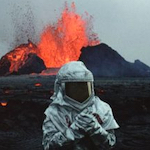
 FIRE OF LOVE is a 2022 best documentary feature Oscar nominee that’s produced by National Geographic, but it’s not the sort of thing I associate with them. It’s one of a couple different movies telling the odd story of maybe history’s first married volcanologist couple, Katia and Maurice Krafft of France. They married in their twenties and spent the rest of their lives traveling around documenting volcano events. And I really mean right until the very end… we’re tipped off at the beginning that they died in the eruption of Mount Unzen in 1991.
Though officially directed by Sara Dosa (TRICKY DICK & THE MAN IN BLACK), the credits are clear that it’s compiled from footage “from the deep archives” of the Kraffts. Clips of TV appearances, illustrative stock footage and a few bits of animation fill in some storytelling gaps, but it’s mostly footage shot by the Kraffts “and friends” – there’s no contemporary talking heads explaining what we should know about them or any of that type of bullshit. The volcanoes they’ll be seen visiting are credited as co-stars. The movie transports us to a different time and primarily lingers in what seems like a different world, far from any sign of human life, where we can see the earth’s raw power up close, as these self-proclaimed weirdos stare right into its gaping jaws, almost seeming tempted to jump in. (read the rest of this shit…)
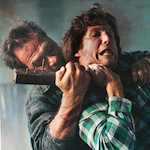 It’s weird that there’s a studio action-thriller starring Jeff Bridges (THUNDERBOLT AND LIGHTFOOT) and Tommy Lee Jones (
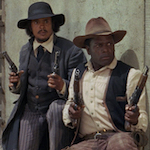 Right after western star Clint Eastwood first directed himself in PLAY MISTY FOR ME, but before he directed his first western with
 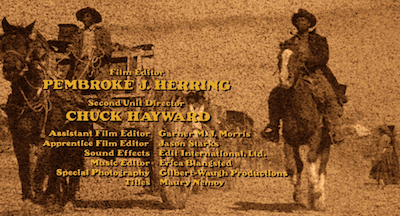 Much like POSSE will have to do 21 years later, BUCK AND THE PREACHER starts out by establishing that yes, silly head, there were Black people in the old west. This history is communicated visually by showing the film’s characters in sepia tone photos. The story takes place after the civil war, when some former slaves decided sharecropping was just slavery 2.0 and tried their luck traveling west to find, as a title card puts it, “new frontiers where they could be free at last.” Where the western genre comes in is that “they placed their hopes in the hands of the few black wagonmasters that knew the territories of the West.”
 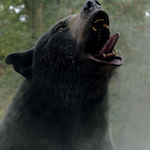 COCAINE BEAR is a kind of funny new horror comedy written by Jimmy Warden (
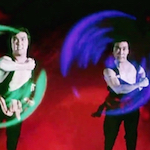 Tsui Hark’s groundbreaking 1983 wuxia epic ZU: WARRIORS FROM THE MAGIC MOUNTAIN recently got a fancy new blu-ray release, inspiring me to finally get around to seeing it. In fact I watched it right before I watched
 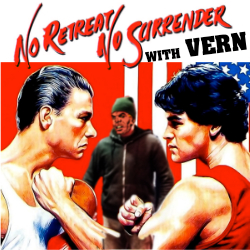 Well, I’ve been thinking about it for far too long, but I’ve finally gone and done it: my first home brew, play along commentary track. This is designed to sync up with the US cut of NO RETREAT NO SURRENDER (the shorter of the two included on the Kino Lorber DVD and blu-ray) but I think it would also work okay if you just want to listen to it like a podcast. I try to explain my love for this intersection of Hong Kong cinema and ’80s American pop culture, with my usual goal of being informative and wise but also funny, sincere, and occasionally stupid. Lots of talk about little details of the movie and the people in it, the Seattle locations, the history of action movies filmed in Seattle, the worldwide phenomenon of Bruce Lee worship, some stupid stories about me, and of course plenty about Van Damme. (Sorry for slagging Chuck Norris for the same reason two different times, but I say some nice things about him too.)
 Watching Ryuhei Kitamura’s latest
  Ryuhei Kitamura is an interesting director. He started in Japan with the attention-grabbing yakuzas vs. zombies movie VERSUS (2000). That one was kinda cool but I straight up loved his fourth movie, the samurai manga adaptation
  SENTINELLE is a pretty good 2021 French revenge movie that’s mostly made out of cliches, but benefits from a dedicated performance by its star Olga Kurylenko (
 TRIANGLE OF SADNESS was the last 2023 best picture nominee I hadn’t seen, but I’d been planning to watch it anyway. It’s the latest from Swedish director Ruben Östlund, and his second in a row to win the Palme d’Or at Cannes. I haven’t seen the previous one (2017’s THE SQUARE), so my impression of him comes from FORCE MAJEURE (2014). Although I liked it I guess I didn’t review it, and I mostly just remember the A+ premise (a guy ruins his marriage in one moment because an avalanche seems to be headed for his family and he runs off without helping them).