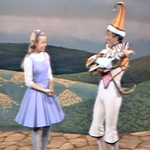

Maybe it doesn’t mean shit to you whippersnappers, but Alice was one of the favorite properties of many young geeks growing up in the late 19th century. And fave genre author Lewis Carroll would be happy to know that his content still exists today. Through the Looking-Glass, and What Alice Found There is Lewis Carroll’s 1871 young adult beach read sequel to the 1865 blockbuster franchise-starter Alice’s Adventures in Wonderland.
Part 2 is a similar nonsense adventure tale where half a year later Alice decides to step through a mirror into a fantasy world on the other side for one last mission. Instead of a government and military force based on playing cards, this time they’re based on chess pieces. TOTALLY DIFFERENT. It’s just a shame Carroll gave it that cumbersome title instead of something sleek like A2: DARK REFLECTION so it would’ve caught on better.
In the tradition of the BOURNE or FRIDAY THE 13TH series, many of the elements associated with the Alice in Wonderland intellectual propertyverse are actually from part 2. The singing flowers, the weird, rotund twin manbabies Tweedle Dee and Tweedle Dum and the poem that they recite (“The Walrus and the Carpenter”) were all included in Disney’s 1951 animated classic ALICE IN WONDERLAND, which continues to be the best known version of the story. Alice finds the poem “Jabberwocky” in a book, but unfortunately it made no sense, audiences couldn’t relate. Luckily we got his backstory in ALICE IN WONDERLAND ORIGINS: JABBERWOCKY (1977) by Terry Gilliam. (read the rest of this shit…)
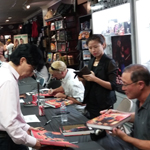 warning: I had to write this down as a time capsule of my book signing experience. Read at own risk.
 Well, we knew he was sick, but I’m still not ready to face a world without Bernie Worrell, the “Wizard of Woo” genius keyboardist of Parliament-Funkadelic.
 If you can make it to
 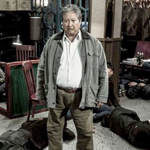 A few weeks ago at the Seattle International Film Festival I saw THE BODYGUARD, or MY BELOVED BODYGUARD as it’s currently listed on IMDb. It’s the new Sammo Hung vehicle, and his first time directing since ONCE UPON A TIME IN CHINA AND AMERICA in 1997. That’s a long fucking time! I didn’t realize it had been that long, but it was still thrilling to see the credit “Director and Action Director: Sammo Hung” not only splashed across a big screen, but in front of a sold out crowd. Unfortunately I can’t say the movie fulfilled the promise of those words.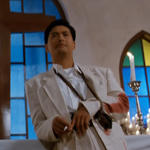
 As a guy specializing in writing about action movies, sometimes I worry I’m documenting an ancient art form. I romanticize a time when action movies were a rite of passage, a father-son bonding tradition and a major passion for many young people, especially males, but it seems like the youth of today aren’t necessarily interested in this shit. And if they don’t grow up on it then they’re never gonna have that moment when they get a little older and become aware of the other powerful strains of it from around the world.
 You know what they say about people who work in movies as some job other than director: they really want to direct. It happens to actors, it happens to writers, it happens to Mel Gibson’s hairdresser who directed