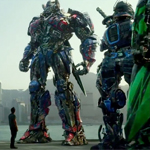
 For God’s sake don’t take this as high praise, but TRANSFORMERS: AGE OF EXTINCTION is the most legitimate movie in the TRANSFORMABLES saga so far. Not too legit to quit while they’re ahead, but competent in ways the others weren’t, and overall much less annoying. The downside: less crazy. Michael Bay has earned an expectation of escalating preposterousness and headscratching whatthefuck moments in each chapter, but this time he verges on tasteful, at least by the standards of his filmography. Only mild racism, no leg humping, only one scene with a hero threatening an old lady with a baseball bat. Robot hyenas with fur and a trigger happy fat Transformer with the voice of John Goodman seem kinda tame after the robot baby factory on the moon, Robot Heaven and peeing and farting robots of previous chapters. And we’ve gotten acclimated to the robot beards. He’s gotta go further than this if he wants to shock us.
And guess how he did it? I cannot fucking believe I’m typing this, but Michael Bay – the George Washington of the cinematic movement that forced me to invent the Action Comprehensibility Ratings system – has made a movie with genuine action clarity.
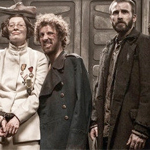 SNOWPIERCER, the Hollywood-stars/English words debut of South Korean director Bong Joon-ho, is the second best train movie I saw on the big screen in June. While UNDER SIEGE 2: DARK TERRITORY is DIE HARD on a boat on a train, SNOWPIERCER is the post-apocalypse on a train. The whole world has been frozen over, eradicating all life except for the lucky bastards that got onto a giant train that has been traveling a globe-spanning track for 17 years.
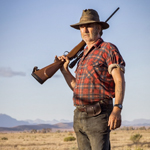 Man, I waited so long for WOLF CREEK 2 that I gave up on it happening like three different times. Back in 2005 director Greg Mclean said “You call that a debut? This is a debut!” with his deeply Australian outback slasher. It was kinda controversial at the time. I remember a Seattle Times critic
 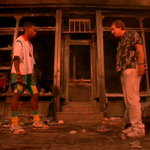 Thoughts on DO THE RIGHT THING, 25 years later.
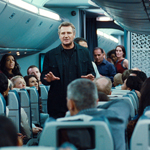 So far I think I like the idea of Liam Neeson action vehicles more than the actual execution of them. Both TAKENs were fun, but with post-actiony scuffles and not as tight of storytelling as I prefer in a formula revenge movie. UNKNOWN from what I remember was kinda fun, but what was it about again? He was playing an amnesiac I believe? Yeah, that’s about how I feel about that one.
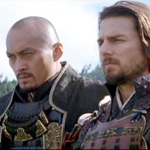 Back in 2003, when THE LAST SAMURAI was new, I had a cynical, kneejerk reaction to it. “Yeah, right… Tom Cruise is the last samurai? Who’s next, someone from the brand new TV show this year America’s Top Model?” I was offended that they wouldn’t make a movie just about samurai, it had to be about the white guy that meets the samurai.
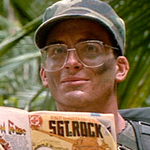 As I’m sure we all heard, Hollywood Reporter
 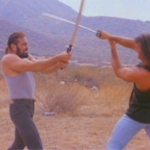 A Japanese gang called The Katana Gang is on a rampage, so the LAPD call in a specialist.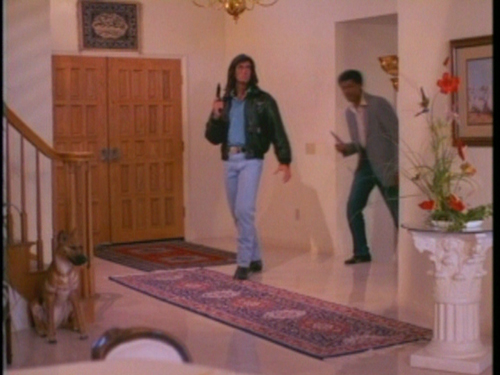
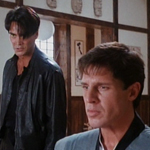 How the fuck does a guy become an American samurai? Well, in the case of Drew Collins (David Bradley, AMERICAN NINJA 3-V) when he was a baby he and his parents were traveling in a small plane that crashed into a tree, only he survived, and then he was raised by an old Japanese guy named Tatsuya (John Fujioka, ZATOICHI IN DESPERATION, AMERICAN NINJA,
  It was 2007. The Year of the Dolphin. The Scouting Centenary. The year of the last Harry Potter book. The year that Anna Nicole Smith and Bam Bam Bigelow passed. The year that DIE HARD turned PG-13. Amidst all that turmoil and unrest