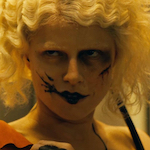
 “THE BRIDE!” (quotation marks co-sign the exclamation point’s insistence that this is not the same as THE BRIDE starring Sting) is a wild and incoherent movie, both for good and bad, and not really in the ways I expected. The trailers suggested a stylized rock musical sort of approach, but they did that by emphasizing the occasional stylistic diversions (a dance fantasy, a James Whale homage). For the most part the world of the movie is more normal and literal than that, grounding the absurd premise “What if the monster and bride of Frankenstein were alive in the thirties and sort of turned into Bonnie and Clyde?” So you got these two heightened monster characters interacting with mobsters and getting chased by cops and regular stuff like that.
In the opening seconds we learn that it’s way more convoluted than the trailer conveyed, with a concept I’m not sure even the full movie gets across with clarity. You see, Academy Award winner Jessie Buckley (MEN) plays Mary Wollstonecraft Shelley, famed author of Kenneth Branagh’s version of Frankenstein. Her soul is trapped in some sort of purgatory where she says she’s been for centuries (though the movie is set in 1936, which is 85 years after Shelley’s death). She says that Frankenstein “wasn’t the half of it. What I wanted to write…what I needed to say, I couldn’t.” Whatever great story she had in mind she never got to put on paper because of a brain tumor, so she possesses a lady in Chicago named Ida (Jessie Buckley, JUDY), sometimes but not most of the time speaks through her, and… somehow causes her to live out her life as that unwritten story? Pretty ballsy of writer/director Maggie Gyllenhaal (THE LOST DAUGHTER) to write a story and have Mary Shelley declare it better than Frankenstein. (read the rest of this shit…)
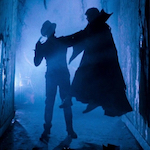 To quote Bushwick Bill, this year Halloween fell on a weekend. I’m sorry that I’m a few days late on my annual essay, but it’s like I always say: the veil should logically be just as thin a couple days after Halloween as it was a couple days before. So if we’re celebrating all October there should be no problem doing it in November.
 This year I decided to write about not only one of my favorite horror movies, but the one I credit with making me fall in love with the genre in the first place. I can’t pinpoint when the fascination started; I remember watching THE SHINING at a friend’s house in elementary school without thinking of it as “my first horror movie” or anything like that. But I have this memory of hearing ads for
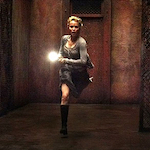 For two decades, as a non-gamer, I have believed that Christophe Gans’s SILENT HILL is the best video game movie. I have a friend who likes the games and thinks it’s a good adaptation, but that was never a factor for me. I just thought that whatever they were doing as far as translation really worked to create a unique horror movie with a strong atmosphere, bizarre creature designs, excellent FX work and an admirable preference for dream logic over boring reality. Even the characters’ numerous illogical choices and what I deemed to be “terrible” dialogue according to
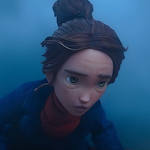 I’m sorry to interrupt the Halloween week horror programming, but it would be negligent not to write about a unique theatrical experience that may pass you by soon: the extravagant stop motion fantasy WILDWOOD. Director Travis Knight (KUBO AND THE TWO STRINGS), writer Chris Butler (director of PARANORMAN) and the studio Laika (CORALINE) live up to their usual high standard of entertainment while aggressively pushing the envelope of what can be done in this medium.
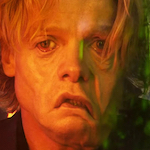 CLAYFACE is the latest motion picture from the Detective Comics movie universe. It’s set mostly in Gotham City, retelling the origin of one of the great Batman villains, but it’s R-rated horror, and not much like a comic book movie, for good and bad. The good – it stands completely on its own, with none of the little movie universe connections, cameos or credit sequences that people used to demand but now get so mad about. The bad – I’d say it could use more of that heightened feeling of the best movies based on drawings. It doesn’t stand out that much from all the other horror movies that are not based on comic books. But I liked it. It has some clunkiness that will probly draw fire under the heightened scrutiny of comic book shit, but that I can forgive.
 Anyway I would classify it as a bad movie, but the type of bad movie that brings me comfort. It’s shot without any grace or sense of style, in a bland location, and most of the cast either read the lines like they’re not clear which word to emphasize in any given sentence, or like they’re a hungry community theater actor throwing their entire being into every squint or turn of the head. Each of their characters is introduced with one psychological condition that determines most of what they do in the movie. There’s not much thought of doing anything else with them.
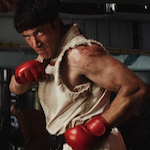 STREET FIGHTER (2026) is the new film based on the Street Fighter video game franchise. I have less of an affinity for Street Fighter than Mortal Kombat since it’s not one of the few games I’ve played, but come on. Larger-than-life characters who live to engage in martial arts competitions, sometimes with cartoonish powers? Obviously it piques my interest. Maybe I’m even the prime audience for this movie since I’m Interested In This Sort of Shit (IiTSoS) but with no preconceived notions of how these characters or concepts need to be adapted. And I have evidence to support this theory.
 As usual October is passing me by and I feel like I’ve barely started with the horror movies. But also as usual I’m gonna watch them year ‘round anyway so what am I worried about? Stay tuned for many more, but today I’m dipping into two new releases on Shudder.
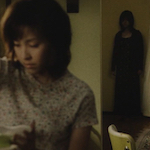 I finally watched Kiyoshi Kurosawa’s 2001 film PULSE (Kairo). I don’t think I’ve seen any of this acclaimed director’s 30+ films, but this is the one people seem to mention most. And I get it now. There’s something very distinct about the potency of its forlorn, foreboding mood and the unusual way it combines a ghost story with an early internet thriller that then dissolves into a surreal apocalypse. The overcast skies, small, impersonal apartments and emphasis on staring at chunky turn-of-the-millennium computer monitors is already depressing before it starts to feel like depression may be its primary subject.
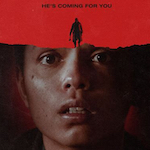 PSYCHO KILLER (2026) was written by Andrew Kevin Walker (