

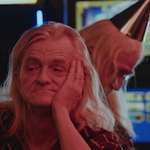
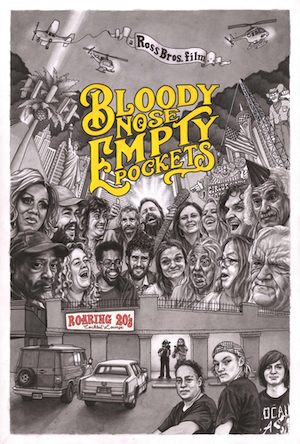
 BLOODY NOSE, EMPTY POCKETS (2020) is an incredible slice of life movie. It’s not a documentary but it sure feels like it is (you even see the camera operators a couple times). It’s kind of like a more verite take on another indie drama I love, LAST NIGHT AT THE ALAMO. It’s the story of the last day of operations for a dive bar called The Roaring 20s, from the morning to the next morning. You’re in this old place full of history, walls covered in photo collages and in-jokes, now joined by hand-written signs with messages like “Y’all don’t come back now, y’hear?” You’re spending a day and a night with a bunch of drunks and weirdos and bartenders, experiencing the power of human connection and the beauty of life in all its flaws and failures and sad endings. So much to love, so much to mourn, this is life.
I love how a movie like this creates a feeling of time. No matter when you watch it you experience the start of a day, the morning greetings, the guy who brought donuts. And eventually it’s dusk, and then it’s the middle of the night, then the sun rising, and though it was only the length of one movie you feel like it was a long day. But a good one.
Some of them seem to be old friends, only because of this place. They’re all so happy to see each other. Late in the night there’s almost a fight, started by a guy whose anger and hatred comes out when he drinks. Most of these people, luckily, go the other direction. They express their love for each other, they hug, they flirt, only once did I think someone was trying to get laid, but the feeling seemed mutual. Some people get very emotional, talking about “you were here for me when I lost my son and I wish I was there for you when you needed me.” There’s a Black Vietnam veteran who tries to talk about things he finds profound, and nobody seems to listen to him much, but when he gets to the point of talking about how he feels ignored and disrespected since coming home from the war there’s a friend (a woman who I think is a fellow veteran?) there to listen and wipe his tears.
 Before that though it’s jokes and anecdotes and smiles. There are two different eccentric guys with long grey hair, one more dominant than the other. The quiet one we actually see walking up to the place, he wears an overcoat and a beret, but when he gets inside he’s down to overalls, he looks like a hillbilly. The more talkative one is named Michael, he always talks about how he used to be an actor, how his generation failed the world, stuff like that. He actually seems barely alive in the morning until he goes into the bathroom and shaves – then he lights up the room. He says he prides himself on not having become an alcoholic until after he failed in life. He thinks it’s so stupid that they’re closing the bar but he loves everybody, has a rapport with everybody, acts almost like he’s on staff, helping to put up lights and things for the closing night party.
Usually he’s kind of putting on a show, trying to be friendly and entertaining. A couple times we see him left to himself, just thinking. Late in the night he’ll be begging a younger man not to turn out like him, and in the morning he’ll be leaving bitterly, his feelings hurt. Everybody has different sides to them, even in one day. There’s a lady named Pam who we see come in and everybody greets her by name, she hugs everybody, when she leaves she needs help to walk and she’s yelling obscenities (in good humor) and they still love her. That’s our Pam.
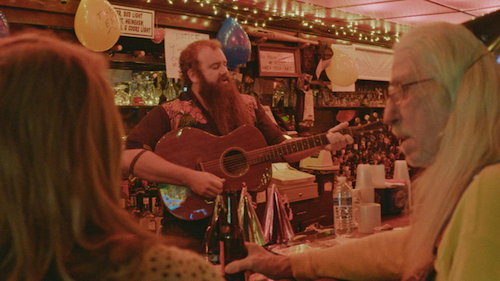 The bartender in the morning is a gruff, burly guy with a western shirt and a long red beard. I had one idea of him and I liked him and then he started strumming a guitar and singing Roy Orbison’s “Crying” behind the bar and I thought jesus, you never know the beautiful things people have going on inside them. A woman comes in who everybody’s happy to see, it took me a second to realize she’s starting her shift and his is ending. Somebody jokes with him about “the end of your bartending career” and he says he’s going out with a whimper. He gives a toast but gets out the door pretty quick and I couldn’t believe I was getting teary eyed already.
You don’t usually see this in movies, but I assumed, and later confirmed, that none of this drunkenness is acting. Apparently even the guy doing acid really did acid. So the slurring, the silliness, the blank stares, these are familiar things that a simulation doesn’t ever get this right. There’s a minor character named Ira, we watch his bleary eyes reacting to Michael off camera talking about being an actor. He’s muttering about him being an idiot, we can’t really translate it all but it’s pretty funny, we can see why Michael’s artsy talk would annoy him so much. Later the bartender gets a call from somebody saying Ira has to come to work. There is a team effort to negotiate and aid his exit to a cab, with his beer in a to-go cup. Man, I hope he’s not working construction.
The second bartender is very memorable in her own way. She has a dirtbag teenage son hanging out in the alley with his friends. I don’t think she minds that they’re smoking weed, but she’s trying to make sure he doesn’t drink. (She fails.) There’s a younger guy who looks like Vincent Gallo (but seems nicer) who keeps flirting with her throughout the night, saying things like “I’m a good stepdad, usually” and he goes out and talks to the kid and assures Mom that “he’s an awesome kid,” and she agrees. He seems like such a fuckup but she loves and appreciates him, as she should.
A few younger people show up to hang out but mostly we admire the old, weathered faces of people probly not living the life they intended to. I don’t think the Gallo guy is serious about hitting on the bartender, and I don’t think she takes him seriously, but she smiles and her eyes light up and like a bunch of characters in this you get to stare at her face long enough that you can imagine what she looked like when she was young. And I think it’s beautiful to see that person still in there even if this isn’t the life she wanted back then.
The Vietnam vet states it explicitly, and many others imply it – this place is where you can go when nobody else wants you. Some of those people seem like they came for a fun night, most of them seem like they may hate their life at home or hate themselves or have some kind of struggles they’re trying to forget about. If they’re dealing with it by basically living here and drinking all day then that’s sad and unhealthy. But also they’re all aware of that, so there’s a real feeling of acceptance. They can joke about their misery, run through all their divorces, and not feel judged. On the rare occasions patrons stop getting along everybody else turns into a referee or a peacemaker and they usually apologize quickly.
One thing that is very clear here is that it’s not scripted. It just couldn’t be. And nobody seems like they’re playing anybody other than themselves, or doing anything other than being in the moment. I loved that movie EEPHUS but as natural as it is you’re also aware of the cinematic construction of it, that people are saying their lines, that they’re dropping plot points. This is clearly something different. I immediately wondered wait a minute – how did they do this? I paused to look it up on Wikipedia, which calls it a documentary, but then says that although it’s set in Las Vegas, where we see some exteriors and where the local news on the TV comes from, it’s filmed at a bar in Terrytown, an unincorporated community in Jefferson Parish, Louisiana. Okay, so… not a documentary, then.
An article in The Guardian explains that filmmakers Bill Ross IV and Turner Ross recruited the cast by making conversations with people at local bars. Then they brought them together to film over two 18 hour days. They immediately realized they had to leave the jukebox on or it felt phony, so somehow we’re always hearing Michael Jackson, Spice Girls, Black Sabbath… I actually suspect the reason to let people believe it’s a documentary is that they used fair use to get the music rights. It really works, though. It’s music that would really be playing.
The two things I wonder about most are the intimations of knowing each other for years and the tensions between a couple of them. Both seemed so authentic. Maybe some of these people really hung out at this same bar together? Or maybe they just formed bonds (and a few resentments) during those two long days and many drinks, and their real emotions were coming out. I really don’t believe it could be “hey, in this scene pretend like you have a long history” type improv, so if I’m wrong then that’s a testament to how well they pulled it off.
I was unsure why they’d need to fake that it was in Vegas, but it allows for some really beautiful hazy, sunny exterior interstitials, and provides a contrast between the humanity inside and the “real world” outside. The article explains that the directors had “been spending time on the edges of Fremont Street, which was really affected by the financial downturn,” so that setting was meaningful to them, but they couldn’t find the right bar there that they could afford.
It’s also set shortly before Trump was elected the first time, so it’s an end of more than just this one establishment. I was glad Trump’s name only came up once, and otherwise was referenced without name on the TV, right before Riki, the Black trans woman, walked in to a warm welcome. There are many of-the-moment themes to consider here, but mostly it’s a timeless portrait. Things are always ending, it turns out. That’s one of the thing that never changes.
The Ross Brothers are younger than me, they look like hipsters, they’re a little annoying in saying “well, everything is a documentary, isn’t it?” instead of “we just took an unusual approach to improv because we like this level of realism,” but I think they made a masterpiece here. They’re from Ohio, transplanted to New Orleans, and this is actually their fifth feature including the David Byrne concert film CONTEMPORARY COLOR (2015). The others seem to be in a similar vein to this one, so I’m going to have to look into them.

























February 18th, 2026 at 5:01 am
This sounds amazing. Straight to the top of my watchlist, thanks Vern!